Intra-Muros vs Extra-Muros in EU Consulting

A permanent building badge, a fixed workstation and daily contact with an institutional team can make a consultant look like an internal colleague. In EU consulting, that appearance is exactly where staffing teams can get into trouble.
The key point is simple: intra-muros contractors are not institutional staff. They remain employees of their outsourcing company or staffing vendor, even when regular access to institutional premises makes them part of the day-to-day operational environment. Extra-muros consultants remain external too, but their delivery model is usually easier to keep visibly separate because work is performed away from the premises and assessed through outputs.
The mistake I see most often is treating intra-muros and extra-muros as little more than office-location labels. They are not. The classification affects access, equipment, supervision, reporting, acceptance and, crucially, the boundary between service coordination and line management.
TL;DR
- Intra-muros means the consultant needs regular access to institutional premises to deliver the service.
- Extra-muros means the consultant does not need regular premises access and the service is usually governed more by outputs, milestones or service results.
- Intra-muros assignments commonly align with time-and-means delivery, meaning the institution buys availability and effort through an external service arrangement.
- Extra-muros assignments commonly align with deliverable-based delivery, meaning the institution buys defined outputs or results rather than day-to-day presence.
- In both models, the consultant remains employed by the vendor or outsourcing company, not by the institution.
What intra-muros and extra-muros actually mean
For intra-muros extra-muros EU consulting, the cleanest starting point is premises access. In the European Commission context, the distinction turns on whether the contractor needs regular access to the institution’s premises to perform the service.
- Intra-muros refers to a contractor who needs regular access to institutional premises to perform the service. The work is commonly embedded in on-site operations and institutional workflows.
- Extra-muros refers to a contractor who does not need regular access to those premises. The service is usually delivered from outside the institution and governed through agreed outputs, milestones or service results.
That distinction is practical before it is contractual. Regular premises access drives the need for badges, workspaces, IT provisioning, meeting access and frequent coordination with internal teams. Off-site delivery changes those conditions: access is normally limited to what is necessary to produce the agreed service.
My recommendation: classify the assignment by the access genuinely required to deliver the service, then design the commercial and governance model around that reality. Do not label an assignment extra-muros simply because the contract mentions deliverables if the consultant must work on-site as part of the institution’s daily operations. Equally, do not make a role intra-muros merely because an occasional visit would be convenient.
The sequence should be simple and deliberate: define the service need, identify the premises access that service requires, choose the delivery model, and then set the governance boundary.
That sequence matters because it forces the organisation to start with the service itself. Once teams begin with preference instead of need, everything else becomes harder to align. A contract can describe outputs very neatly on paper, but if the real operating model depends on daily on-site presence, the assignment will still behave like intra-muros work in practice.
The practical difference: availability versus outputs
Once the access requirement is clear, the next question is how the service is being bought and managed. Intra-muros and extra-muros assignments commonly align with different contract logic. This is where a well-designed staffing arrangement separates itself from one that slowly turns into unmanaged ambiguity.
| Area | Intra-muros assignment | Extra-muros assignment |
|---|---|---|
| Primary operating reality | Regular work on institutional premises | Work performed outside institutional premises |
| Typical delivery logic | Time-and-means: availability and effort within a staffing arrangement | Deliverable-based: defined outputs, service packages or results |
| Performance focus | Operational support, availability and day-to-day contribution | Quality, timing and acceptance of agreed deliverables |
| Contact with the institution | Frequent operational coordination | Scheduled progress updates, reviews and acceptance points |
| Access profile | More routine building, meeting and workflow access | Access limited to what delivery requires |
| Key governance risk | Informal management drift into staff-like treatment | Vague scope, weak acceptance criteria or uncontrolled changes |
Time-and-means does not mean the institution has hired the individual. It means the institution is buying availability and effort through an external service arrangement. The staffing vendor or outsourcing company remains the consultant’s employer, and the institution remains the recipient of the service.
Deliverable-based work does not mean the institution has no involvement until the final handover. It means supervision should be centred on progress, milestones, issues and acceptance rather than on continuous direction of the individual’s working day.
This difference affects more than contract wording. It shapes how managers ask for work, how progress is tracked, what counts as acceptable performance and when a service is considered complete. In a time-and-means environment, the institution is usually managing an ongoing need for support. In a deliverable-based environment, the institution is mainly managing whether the agreed result has been produced to specification and on time.
For HR and staffing teams, that difference has practical consequences. It influences scope control, supervision intensity, reporting cadence, acceptance criteria and responsibility for delays or rework. If those elements point in different directions, the assignment becomes difficult to defend operationally and difficult to run cleanly.
Set the assignment up in the right order
The strongest arrangements deal with access, scope and reporting before the consultant starts. Trying to repair these boundaries after someone has been given a desk, a badge and a stream of direct task requests is far harder.
1. Define the access requirement, not the preferred workstyle
Step → Action → Result: identify the work that must happen on the premises, confirm how regularly access is needed, and then assign an intra-muros or extra-muros operating model.

This matters because regular access is the core practical marker of an intra-muros assignment. The correct decision is based on service necessity: access to internal workflows, on-site operational coordination or facilities may make regular attendance necessary. Convenience alone is a poor basis for classification.
Common mistake: allowing the expected individual or hiring manager to determine the category based on personal preference. That creates a model that cannot be cleanly defended when access arrangements, supervision and contractual delivery no longer match.
A useful test is to ask a simple question: could the service still be delivered properly if the consultant worked mostly off-site? If the answer is yes, extra-muros is usually the cleaner fit. If the answer is no because the service depends on regular premises access, daily operational coordination or constant interaction with on-site workflows, intra-muros is the more honest model.
2. Match the contract logic to the service
Step → Action → Result: describe what the institution is buying, choose availability-based or output-based control points, and make performance assessment consistent with the agreement.
Intra-muros work commonly fits a time-and-means structure because the institution needs reliable on-site support within an established work pattern. That makes operational availability relevant, but it does not erase the external nature of the engagement.
Extra-muros work commonly fits a deliverable-based structure because the institution is purchasing a defined result. In that setting, scope control, milestone reviews and acceptance criteria carry more weight than where the consultant sits on a particular day.
Judgment call: when an assignment has both on-site support and distinct outputs, avoid leaving the two models blended into one vague arrangement. The contract should make clear which service elements require regular premises access and which are assessed as deliverables.
This is also where many avoidable disputes begin. If the service is described as output-based but the institution actually expects continuous availability, daily task switching and open-ended support, the model will become unstable very quickly. By the same token, if an intra-muros service is written too loosely, managers may assume they can supervise the person as if they were part of the internal staff structure. Clear contract logic reduces both problems.
3. Preserve the external reporting line
Step → Action → Result: name the institutional service lead and the vendor-side employer relationship, route operational coordination through the service structure, and prevent staff-like management.
The institutional contact person should act as a service lead, task owner or contract supervisor. That role is important: the institution must be able to state service requirements, coordinate work and assess delivery. But it is not the same as becoming the consultant’s internal line manager.
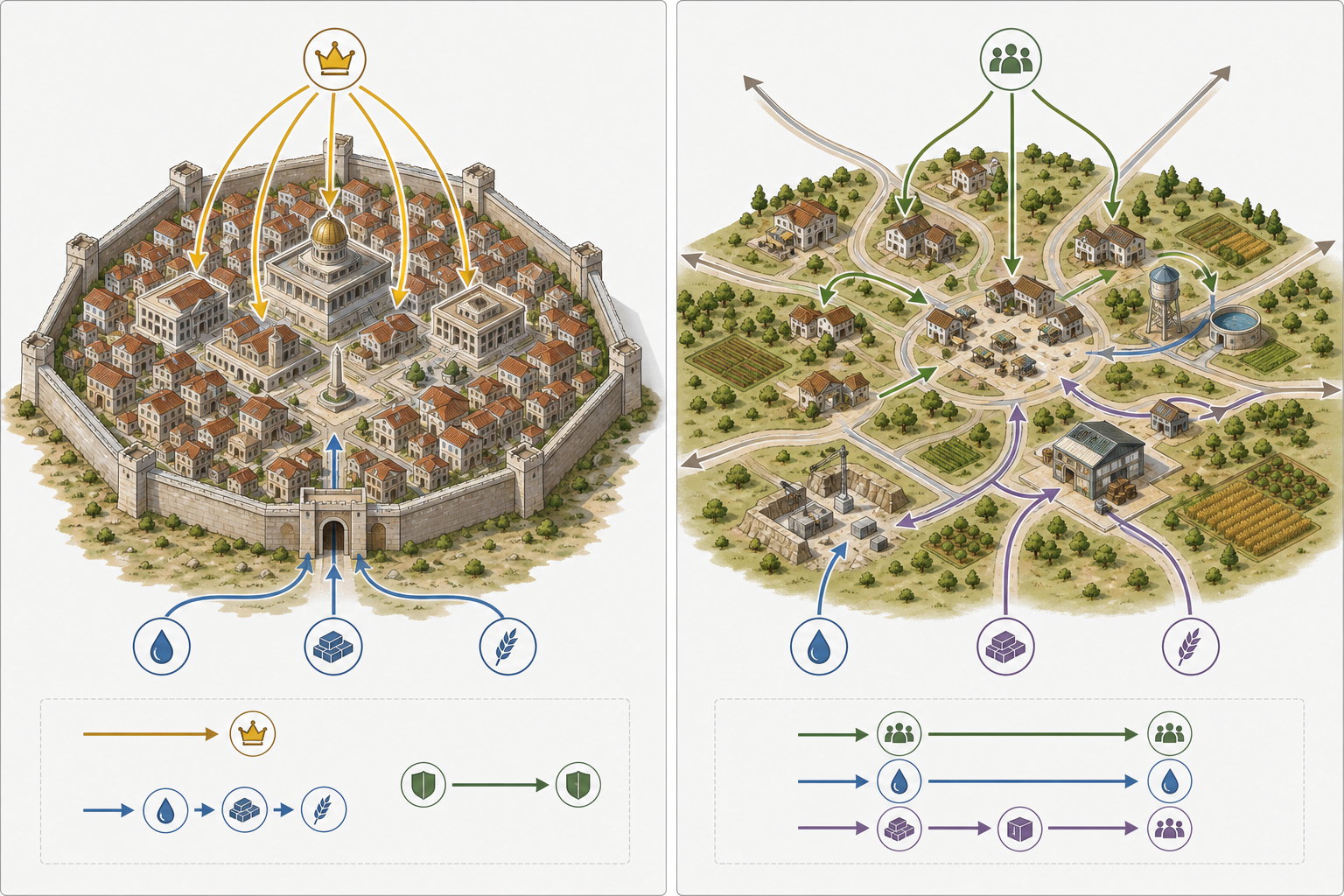
For intra-muros consultants, this boundary needs active attention because daily proximity makes informal management drift easy. A consultant can attend operational meetings, support a team and receive work priorities without becoming part of the institution’s staff hierarchy.
For extra-muros work, the reporting model should naturally be more document-based:
- progress updates;
- milestone reviews;
- delivery acceptance;
- issue escalation through the vendor or contract lead.
The distinction is not cosmetic. It keeps the legal relationship clear: the consultant’s employment relationship remains with the outsourcing company or staffing vendor, while the institution remains the recipient of the contracted service.
This is where the term reclassification risk matters. In plain terms, it is the risk that an external service arrangement starts to look and operate too much like ordinary employment within the institution. The closer the day-to-day reality moves toward direct line management, staff-style supervision and routine treatment as part of the internal workforce, the harder it becomes to maintain a clean external boundary.
4. Provision access deliberately
Step → Action → Result: identify the equipment, building and IT access required for delivery, provide only the access justified by the service, and keep the operating model visible in practice.
Access decisions tell people how integrated a contractor is expected to be. For intra-muros work, a fixed workstation, institutional laptop, routine premises access and a permanent or semi-permanent badge may be necessary to support the service. For extra-muros work, the usual profile is more limited: no permanent desk, no permanent badge and access restricted to the systems or information needed for the agreed output.
Do not make the mistake of assuming that off-site delivery means no institutional IT access. Extra-muros consultants may still require access to an IT environment or institutional equipment. The better test is not “Does the person have a laptop?” It is “Does the service require regular access to the premises?”
In one EU service-provider coding approach, the practical variations are clear:
- PPW: an intra-muros provider with a workstation, institutional laptop, permanent office and permanent building badge.
- PXE: an extra-muros provider working outside the premises with EU equipment and an institutional laptop, but without a permanent building badge.
- PXI: an extra-muros provider working outside the premises with IT-environment access but without an institutional laptop or building badge.
These codes are useful as operational examples, not as a substitute for deciding what the service genuinely requires.
The important point is that equipment access and premises access are related, but they are not identical. A consultant can need digital access without needing a permanent desk. A consultant can also need on-site presence without becoming institutional staff. Good staffing governance keeps those distinctions visible instead of letting administrative choices tell the wrong story.
Where assignments go wrong — and how to correct them
Once the setup is wrong, daily behaviour usually follows it. That is why the most common problems are not theoretical; they show up in ordinary management habits, access decisions and poorly defined acceptance rules.
The intra-muros consultant is treated as staff
This happens when the consultant is embedded so deeply in a team that direct instructions, informal supervision and staff-style expectations become routine. Physical presence is not the problem; unmanaged expectations are.
Fix: restate the service-lead role, maintain the vendor’s role as employer and use a clear service-management structure. The institution can coordinate delivery without absorbing the consultant into its staff hierarchy. This protects the intended external relationship and reduces reclassification risk.
Typical warning signs are simple and practical: the consultant is spoken about as if they were part of the internal headcount, work is assigned through ordinary staff channels without reference to the service arrangement, or performance is judged mainly as personal attendance rather than service delivery. None of those signs changes the legal status by itself, but together they show that the governance boundary is weakening.

The extra-muros contract has no measurable acceptance point
An off-site assignment becomes difficult to manage when the institution buys “support” but has not defined what will be reviewed, when progress will be reported or how delivery will be accepted. The result is often a time-and-means relationship disguised as a deliverable-based one.
Fix: anchor governance in the agreed output or service package. Progress updates, milestone reviews, acceptance and escalation should be visible parts of the delivery model, not afterthoughts added when work begins to drift.
Without that structure, extra-muros delivery can become vague on both sides. The institution may feel it has too little control, while the vendor may face open-ended requests that were never translated into scoped deliverables. Clear acceptance points bring the arrangement back to what it is supposed to be: external delivery assessed through defined results.
Access is provisioned before the model is agreed
A desk, permanent badge and broad system access can quickly create an intra-muros reality, even if the assignment was described as external delivery. Conversely, withholding necessary access from a genuinely intra-muros consultant slows down a service that depends on daily operational participation.
Fix: align access with the service classification from the outset. Procurement language, IT provisioning, site access and reporting arrangements should all point in the same direction.
This is why classification should happen early, not after onboarding has already started. Once the visible features of the role are in place, people tend to manage the consultant according to those visible cues. If the practical setup says intra-muros but the paperwork says extra-muros, daily behaviour usually follows the practical setup.
The advanced move: separate access from employment status
The mature staffing approach is to treat premises access as an operational requirement, not evidence of employment. This sounds obvious, but it is the discipline that prevents the worst confusion in intra-muros delivery.
An intra-muros consultant may need to be present, use institutional equipment and work closely with internal teams. None of that changes the fact that the consultant is employed by the external company and delivers a contracted service to the institution.
At the same time, an extra-muros consultant may need limited IT access, scheduled institutional meetings or a formal service lead. None of that automatically turns the assignment into intra-muros work. The deciding factor remains the need for regular access to institutional premises.
Keeping that distinction clear helps HR, procurement and operational managers stay aligned. It also keeps decisions about badges, desks, laptops and access rights in their proper place: as tools to enable service delivery, not as signals that rewrite the legal relationship.
What done right looks like
- Classify the service early based on the premises access it genuinely requires.
- Use intra-muros arrangements for regular on-site operational support, commonly managed through time-and-means delivery.
- Use extra-muros arrangements for external delivery, commonly governed through defined outputs, milestones and acceptance.
- Keep the consultant’s employer relationship with the staffing vendor or outsourcing company visible at all times.
- Give the institution a clear service-management role without allowing that role to become staff-style line management.
- Align badges, desks, laptops, IT access, reporting and acceptance with the delivery model rather than treating each as a separate administrative decision.
The distinction between intra-muros and extra-muros is straightforward only when access, contract structure and daily governance all tell the same story. Get those three elements aligned, and the assignment is easier to run, easier to assess and far less likely to blur the line between external service delivery and employment. For staffing teams working with EU institutions, that is the real value of the distinction: not theory, but a cleaner operating model that holds up in practice.