Brussels–Luxembourg EU Assignments: Avoid Cross-Border Gaps
Relocation is not one administrative task
Moving for an EU-linked assignment can look straightforward: secure accommodation, start work, settle in. The expensive mistakes happen when someone treats their new address, payroll country, tax residence and social-security coverage as if they automatically mean the same thing.
They do not always align. A consultant can live in Brussels, work in Luxembourg, be paid through a Luxembourg payroll and still need careful coordination of tax residence, social security and healthcare rights. The reverse arrangement creates the same risk. The most common mistake is waiting until the first tax year-end or the first medical need to work out what applies. By then, the records are incomplete and every team is working from a slightly different version of the assignment.
The right approach is to manage the move as one cross-border case from day one. Registration, tax, payroll, social security and healthcare should all be based on the same documented facts: where you live, where you work, how often you cross the border and where your family is settled.
The work is not complicated because there are many forms; it is complicated because the arrangement must reflect reality. Expect the setup to run through the first several weeks of the assignment, particularly where commune follow-up, A1 processing or healthcare registration is involved.
Start with the distinctions that prevent most mistakes
Before booking appointments or asking payroll to make assumptions, separate the three positions that are routinely blurred together:
- Physical residence: where you actually live and sleep.
- Local registration: where you are registered with the commune or municipality based on that residence.
- Tax and social-security position: where you are treated as tax resident and where the applicable social-security system sits.
Those positions may all be in one country. They may also be split across Belgium and Luxembourg. Do not assume that the country where the assignment is based automatically becomes your tax home, or that the payroll location settles the social-security question.
Define where you live, work and are insured → Build every administrative decision on the same facts
This is the foundation for every other relocation decision on a Brussels–Luxembourg assignment. If it is wrong, the commune file, work pattern, A1 request and healthcare setup can all drift apart.
What to prepare before the first administrative appointment
Create one relocation file before the assignment begins. Do not leave key evidence in separate email threads, travel apps and payroll portals. A clean file is what lets you show that your official records match your actual circumstances.
- Assignment letter.
- Payroll contract or employment documentation.
- Lease contract or other proof of accommodation.
- Identity document.
- Family documents where dependants are moving or registering.
- Expected work pattern, including onsite, hybrid, remote and cross-border days.
- Copies of A1 and S1 documentation once issued.
- Commune or municipality registration confirmations.
- A travel and workday log.
Do not wait until the end of the year to reconstruct this file. A lease proves an address, but it does not prove where you actually spent each night or performed each workday. Those records need to begin when the arrangement begins.
Step 1: Decide whether this is a true relocation or a commuter arrangement
Step 1 → Confirm the actual living arrangement → Apply the right registration, tax and healthcare pathway
The first judgment call is whether the assignment involves living in the country of work or commuting from the other side of the border. This is not a lifestyle detail. It changes the administrative case.
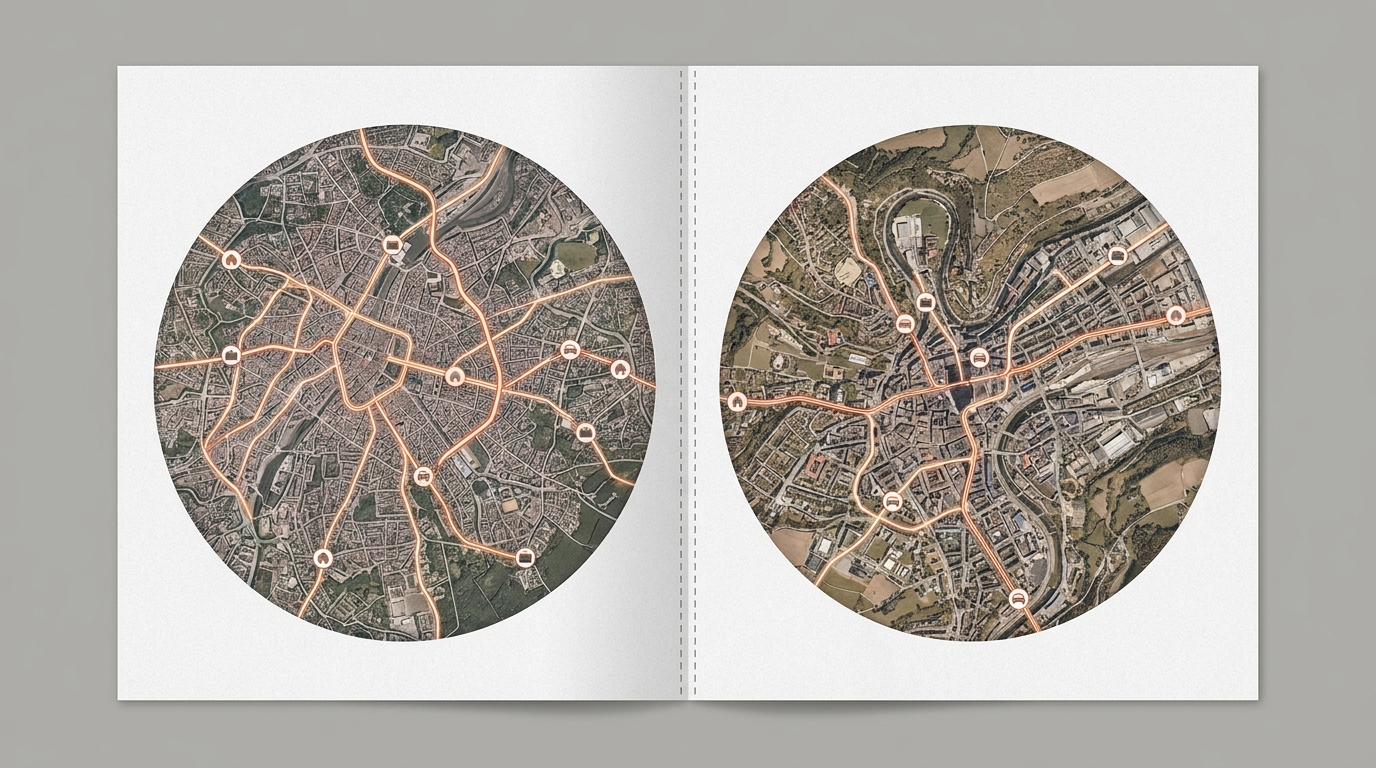
If you will live in Brussels and work in Luxembourg, your Belgian residence is central to the file even though the employer payroll may sit in Luxembourg. If you live in Luxembourg and work in Belgium, the same principle applies in reverse. Working in a country does not by itself create municipal residence there; the actual living arrangement drives the local registration step.
Get the intended pattern written down before the start date. The note should cover:
- Primary country of work.
- Actual country of residence.
- Whether travel across the border will be weekly or occasional.
- Whether work is fully onsite, hybrid or split between locations.
- Expected remote-work days.
- Reporting line and assignment start date.
This written mobility note is more useful than a vague statement that someone is “based in Luxembourg” or “working from Brussels.” It creates one reference point for payroll, tax and social-security coordination.
Step 2: Register locally once you have a stable address
Step 2 → Secure documented accommodation → Start commune or municipality registration promptly
For a Brussels residence, local registration is handled through the commune where you live. The practical trigger is a stable address with evidence that you occupy it. In Luxembourg, residents likewise need to treat commune registration as an early task; cross-border commuters should not confuse work in Luxembourg with residence there.
Prepare the documents that support the address and identity file:
- Passport or national identity document.
- Signed lease contract or accommodation evidence.
- Assignment or employer letter where requested.
- Family records when dependants are registering.
- Passport photographs if requested by the relevant commune.
The initial commune submission can take around 30 to 60 minutes, but that is not the whole process. Residence verification or administrative follow-up can take from a few days to several weeks. Full completion often takes two to eight weeks depending on commune workload.
The practical move is to arrange the commune visit as soon as the address is settled. In busy Brussels communes, the appointment itself can become the hidden bottleneck. Delaying because the assignment “is only just starting” can delay the rest of the relocation file.
Where local registration goes wrong
- The lease does not clearly support the address. Use a signed contract and, where available, recent utility evidence.
- The name is not visible at the address. Ensure the mailbox reflects the occupant after moving in.
- Administrative follow-up cannot confirm occupancy. Stay reachable and reply quickly to requests.
- The consultant registers based on the office location rather than the residence location. Local registration follows where the person actually lives.
Step 3: Map tax residence before the first full month ends
Step 3 → Record real presence and family ties → Avoid accidental tax-residency drift
Tax residence is not simply where the employer pays salary. It can turn on the home available to you, family location, habitual abode, day count and the position under domestic rules and applicable tax treaties.
The common failure pattern is gradual rather than dramatic. A supposedly short Brussels stay becomes a longer assignment. A Luxembourg role becomes a regular commuter arrangement from Belgium. A temporary apartment becomes the only stable home for the year. Payroll may still be operating on the original plan while the real facts have changed.
Use a simple tracker from day one. Record the date, country where you slept, country where you worked, travel days and employer location. This takes around five minutes a day and can prevent a far more difficult annual reconstruction.

- Ask payroll and mobility teams which country they treat as the work location.
- Keep a weekly record of physical presence by country.
- Keep proof of where you actually sleep, not only where you perform work.
- Review the tax position early where a partner, children or a second home are involved.
- Separate host-country workdays from remote-work days elsewhere.
An initial discussion with payroll or a tax adviser can take one to two hours. That is time well spent. The shortcut to avoid is relying on a single day-count rule as if it settles the whole analysis. Family location and the centre of day-to-day life can matter heavily.
Step 4: Treat cross-border commuting as its own work model
Step 4 → Document the Belgium-Luxembourg work split → Keep payroll, tax and social security aligned
Cross-border commuter status is not a casual label for someone with a long train journey. It is a distinct arrangement that needs to be documented through the actual residence and work pattern.
For a Belgium-based resident working in Luxembourg, payroll may be Luxembourg-based, while social security and taxation still depend on where work is physically carried out and how the work is split. For a Luxembourg-based resident working in Belgium, Belgian registration and tax exposure can arise quickly where the actual work is performed in Belgium.
Do not let the home address and payroll address diverge without a formal review. That mismatch is where otherwise manageable assignments become difficult to explain. Work-from-home days deserve the same attention as office days because they can change the overall picture.
Step 5: Resolve social security before relying on payroll assumptions
Step 5 → Match the A1 request to the real work pattern → Establish which social-security legislation applies
The A1 portable document is central where work takes place across borders or in more than one EU country. It shows which country’s social-security legislation applies. This matters particularly when someone lives in Belgium and works part of the week in Luxembourg, is seconded while remaining affiliated with the sending country, or splits duties between Brussels and Luxembourg.
The key judgment is simple: the A1 request must describe the actual pattern of work, not the neat version written at the beginning of the assignment. If hybrid work, travel or office allocation changes, the social-security position may need to be reviewed and the documentation updated.
- Confirm which country is expected to issue the A1.
- Check that the request reflects actual residence, work locations and cross-border travel.
- Keep a copy in the relocation file.
- Review the document when the work pattern changes rather than after the fact.
A1 processing can range from a few days to several weeks depending on the case. Starting cross-border work without addressing it is a poor trade-off: the assignment may look operationally simple while the contribution position is unclear.
Step 6: Set up healthcare for where you live, not just where you travel
Step 6 → Confirm insurance country and S1 need → Protect local healthcare access after relocation
Healthcare is often handled too late because an EHIC-style card feels like enough protection. It is useful for temporary stays, but it is not a substitute for proper residency-based coverage when you have relocated.
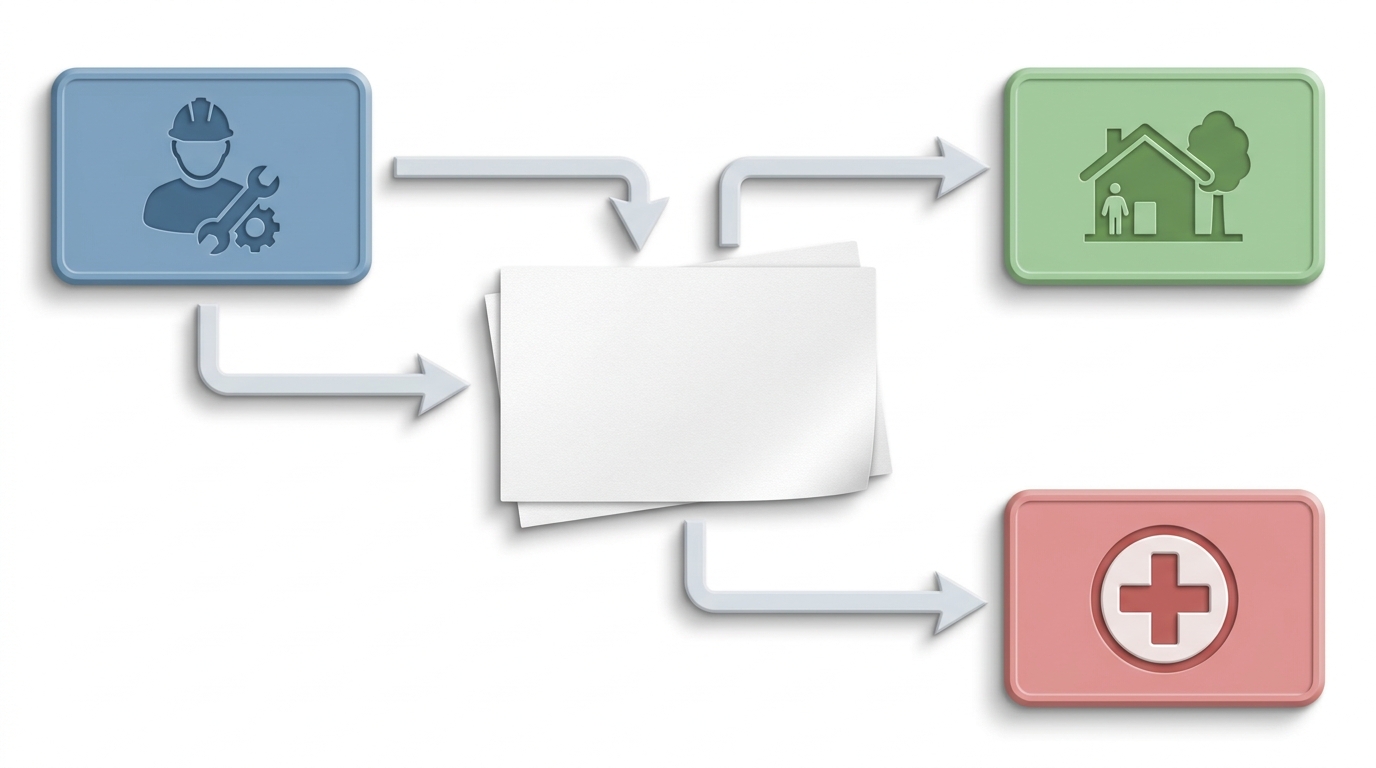
The two documents to coordinate are closely connected to the underlying social-security position:
- A1: confirms which social-security legislation applies when work crosses borders.
- S1: is used to register healthcare entitlement in the country where you live while remaining insured in another country.
If you are insured in one EU country but resident in another, the S1 can be the route to local healthcare access. Register it promptly with the relevant local health fund or competent institution once issued, and keep copies of all documents. Hospitals and insurers may request them.
Plan two to six weeks for the full healthcare setup. S1 registration can move more quickly once the form is issued, but appointments and the underlying A1 position can extend the timeline.
Get written confirmation of who pays the primary contributions and where secondary healthcare rights are registered. Oral reassurance is not enough when the assignment spans Belgium and Luxembourg. Check family coverage at the same time, especially for a spouse or children.
Troubleshooting the failures that cause the most disruption
“Payroll says Luxembourg, so Luxembourg must be my tax residence.”
Payroll location and tax residence are not interchangeable. Go back to the factual record: home, nights spent, family location, workdays and the wider pattern of life. Keep the record current rather than trying to create it during annual reconciliation.
“I have an EHIC, so healthcare can wait.”
That approach can leave a gap once the move is no longer a temporary stay. Confirm the insurance country, clarify whether an S1 is needed and complete local registration as soon as the document is available.
“My A1 reflects the original assignment plan, but I now work differently.”
Do not assume the original document still matches the case. A change in where work is performed, especially more remote work or a new split between Brussels and Luxembourg, needs to be raised promptly so the social-security position remains aligned with reality.
“We have three teams, so each can manage its own part.”
This is how inconsistent start dates and mismatched addresses enter the file. Payroll, tax and social security are connected. Use one relocation record containing the assignment letter, expected residence, actual first day, family position and working pattern. Everyone should work from the same version.
The advanced move: run a weekly evidence check
The strongest cross-border files are not built at year-end. They are maintained in a short weekly check:
- Update nights spent and workdays by country.
- Save travel evidence and changes to remote-work patterns.
- Check whether the stated work model still matches reality.
- File new commune, healthcare, A1 or S1 correspondence immediately.
- Flag a changed family or accommodation arrangement before it creates a tax-residency issue.
This is not bureaucratic overkill. It is the efficient alternative to explaining months of cross-border activity after the evidence has been lost. A five-minute daily tracker and a properly maintained relocation file do more for the assignment than a last-minute scramble with payroll, tax and healthcare teams.
TL;DR: the key moves
- Separate where you live, where you register, where you are tax resident and where you are socially insured.
- Decide early whether the Brussels-Luxembourg arrangement is a relocation or a cross-border commuter model.
- Register with the relevant commune or municipality once you have a stable, documented address.
- Track nights, workdays, travel and family location from day one.
- Do not treat payroll country as automatic proof of tax residence or social-security coverage.
- Use A1 documentation to support the actual cross-border work pattern.
- Use S1 registration where you live in one country while insured in another; do not rely on EHIC alone after relocating.
- Manage payroll, tax, social security and healthcare as one file built on the same facts.